The shared thesis
Nature Machine Intelligence requires two things: understanding how models compute internally, and models that understand the physical world. These have been pursued by separate communities with separate toolkits, but the underlying problem is the same: extracting structured, human-readable knowledge from opaque systems without drowning in intervention budgets or losing the signal to qualitative claims with no numbers behind them.
Three open-source projects share one architectural principle. Each answers a different question, each is measured precisely, and each has its own verified results.
| Project | Question | Key result | Site |
|---|---|---|---|
| GNOmE | What is a neural network computing, with one forward pass? | O(1) queries, 3/7 IOI components recovered | gnome |
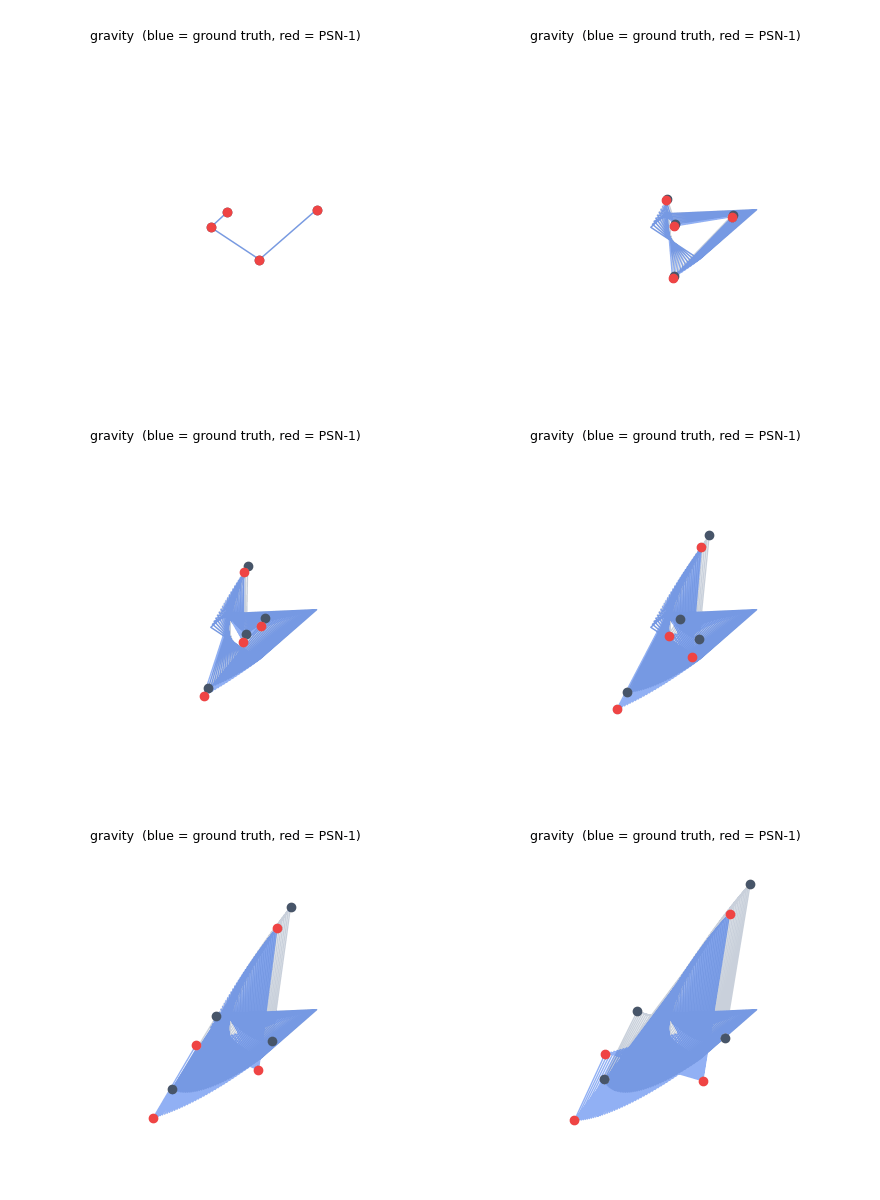
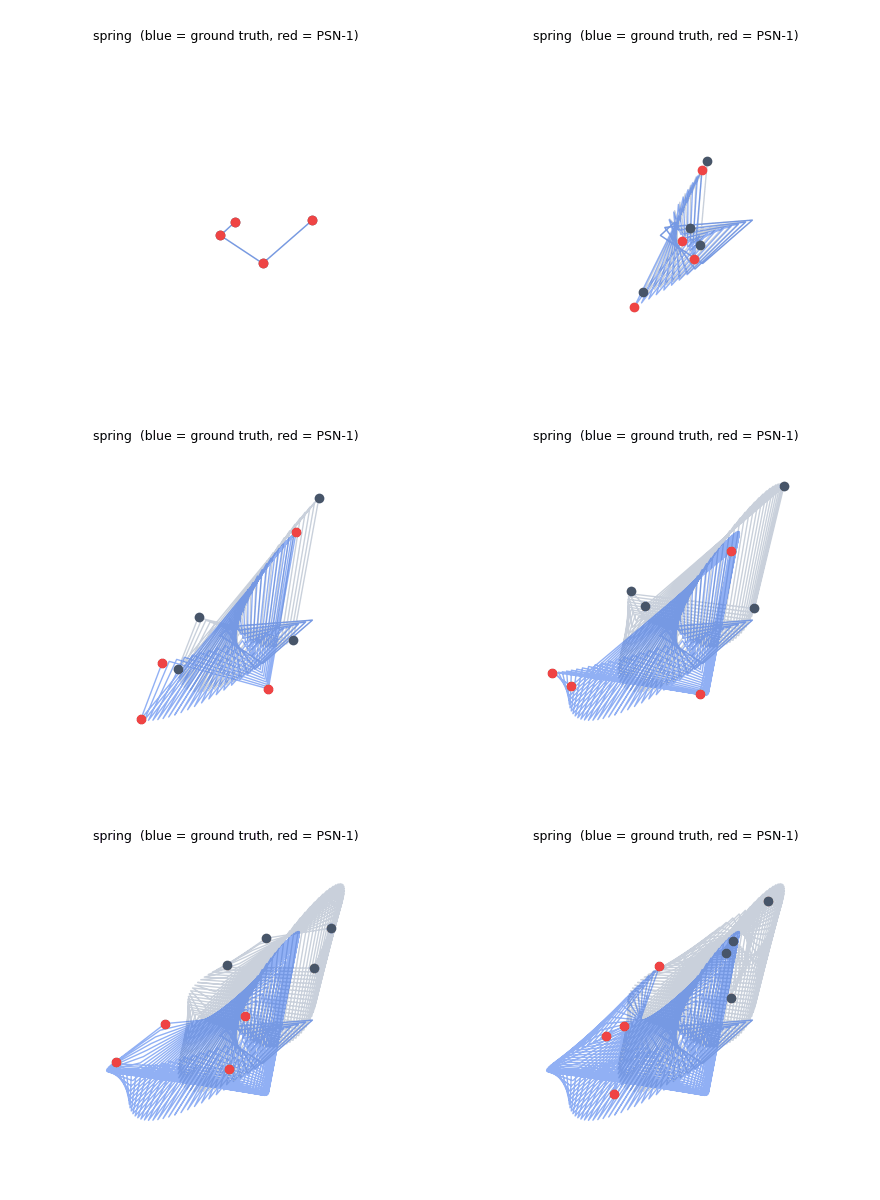
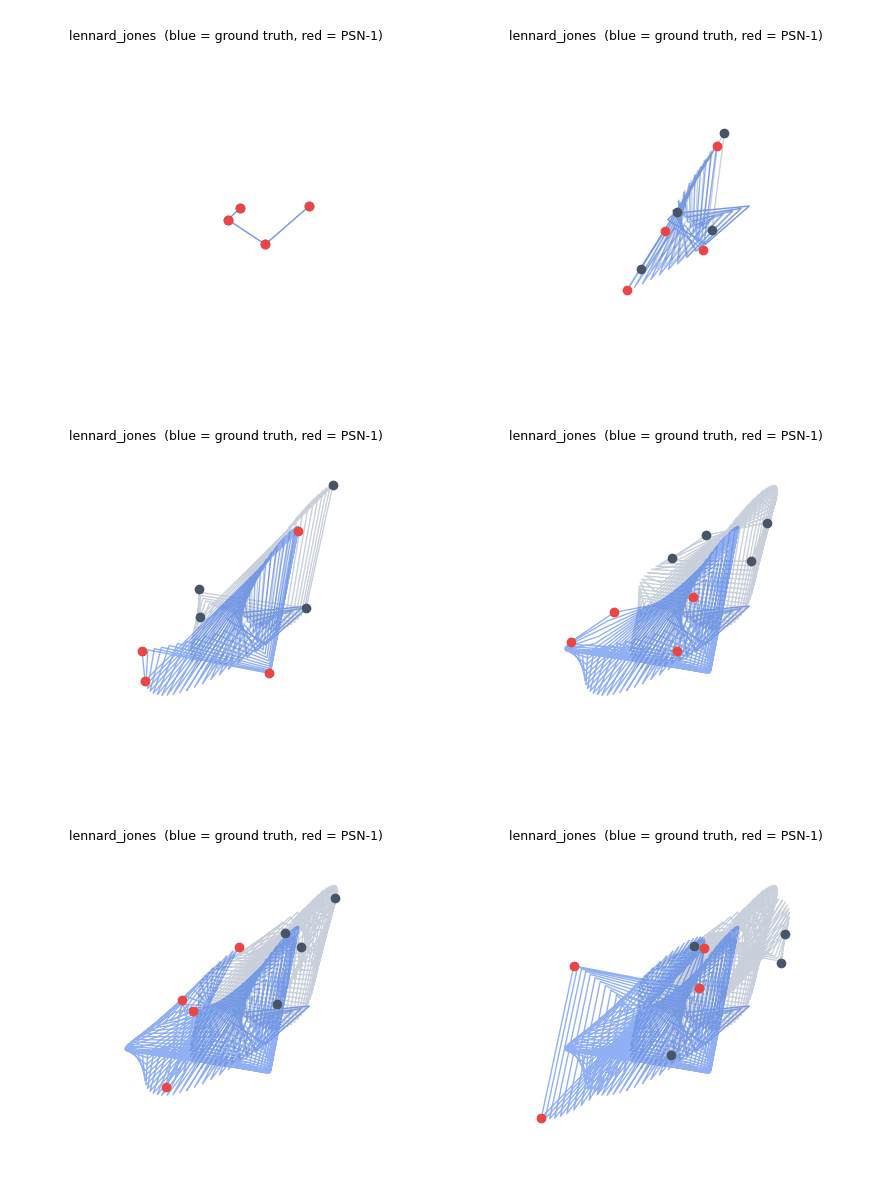
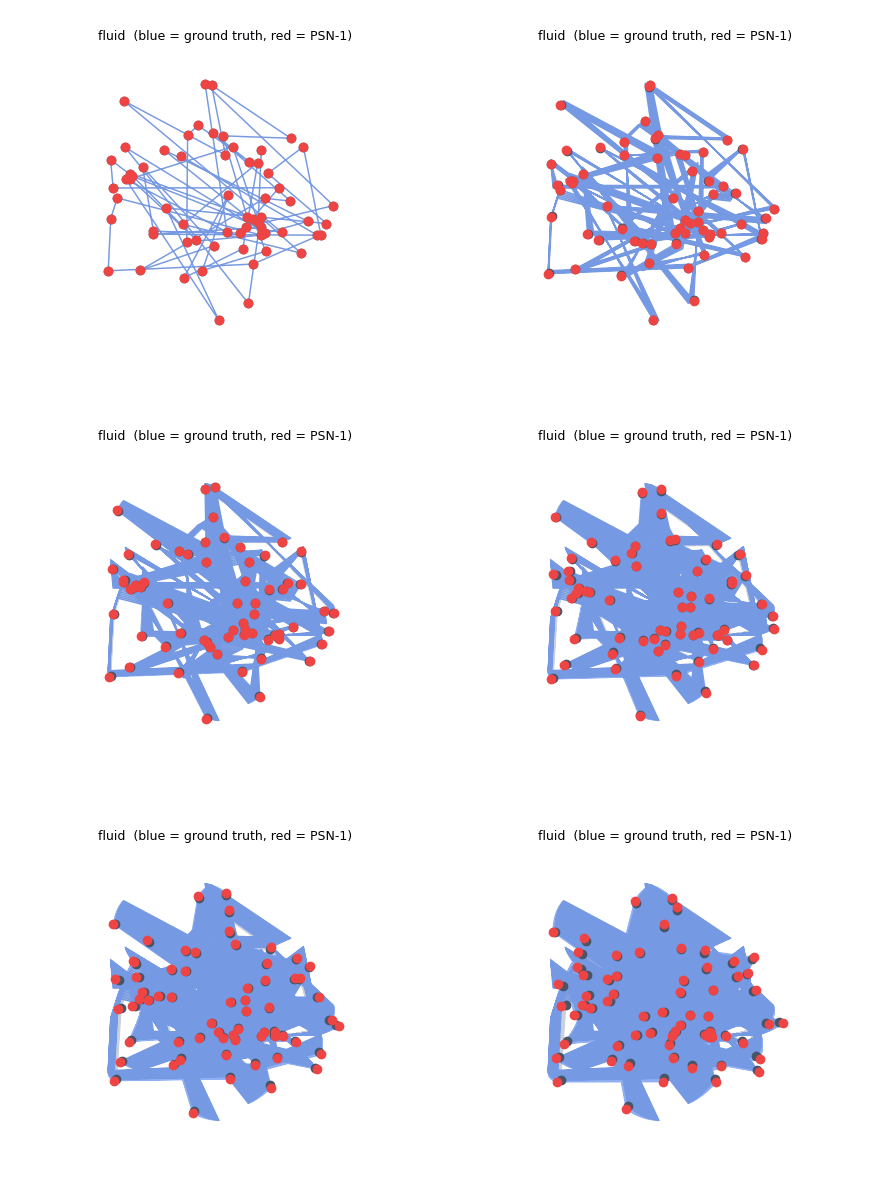
| PSN-1 | Can one architecture simulate nine physics domains? | 9 domains, gravity MSE 3.4e-11 | physrnet |
| GNoME-Mfg | Can graph networks predict every kind of engineered system? | 4/7 domains beat mean predictor (R² 0.51–0.92) | gnome-manufacturing |
GNOmE: read the circuit
A transformer's forward pass is already a graph. GNOmE extracts it and reads it with a GNN to predict per-unit causal importance. Query complexity: O(1) vs O(N²) for path patching. Cross-task transfer: r = 0.954 from IOI → Induction Heads. On GPT-2 Small, three of seven known IOI component classes rank in the top 25% of 156 units — from a single forward pass, zero interventions.
PSN-1: simulate the physics
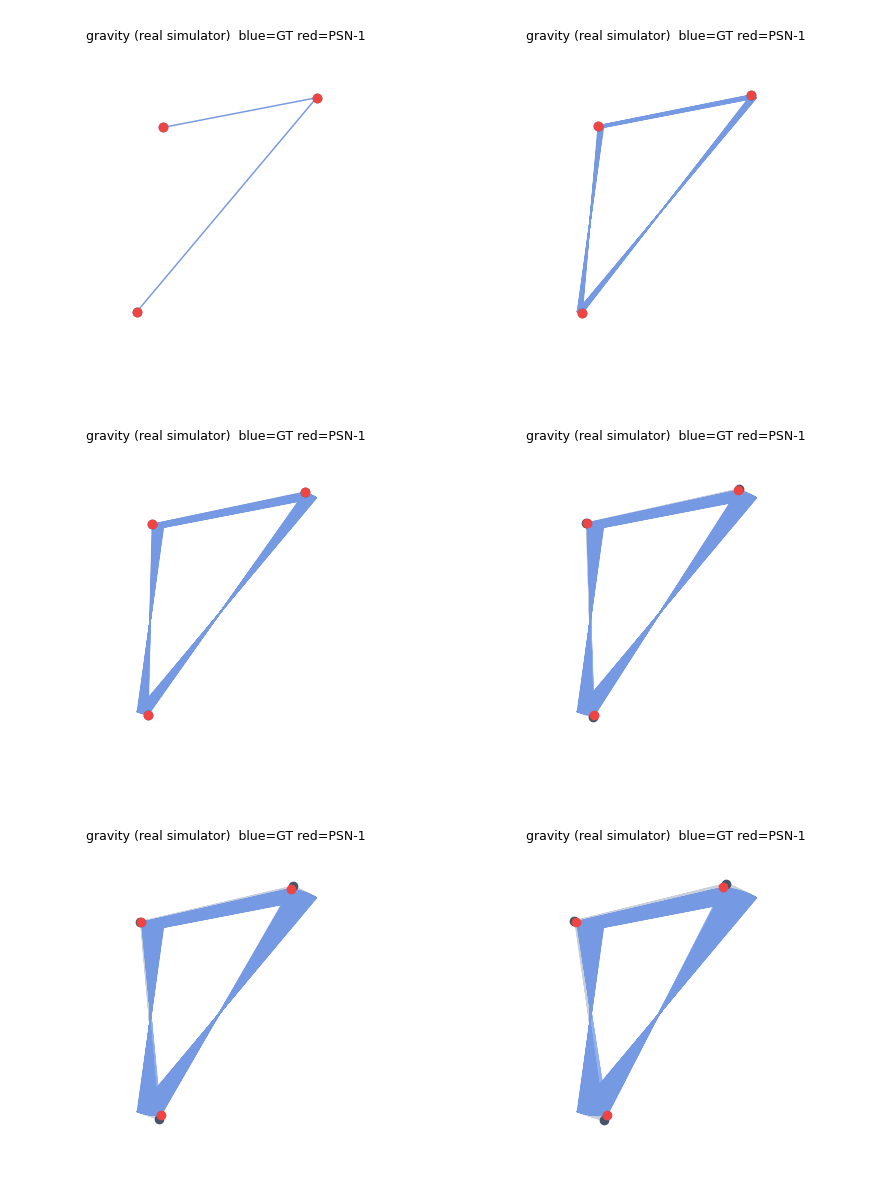
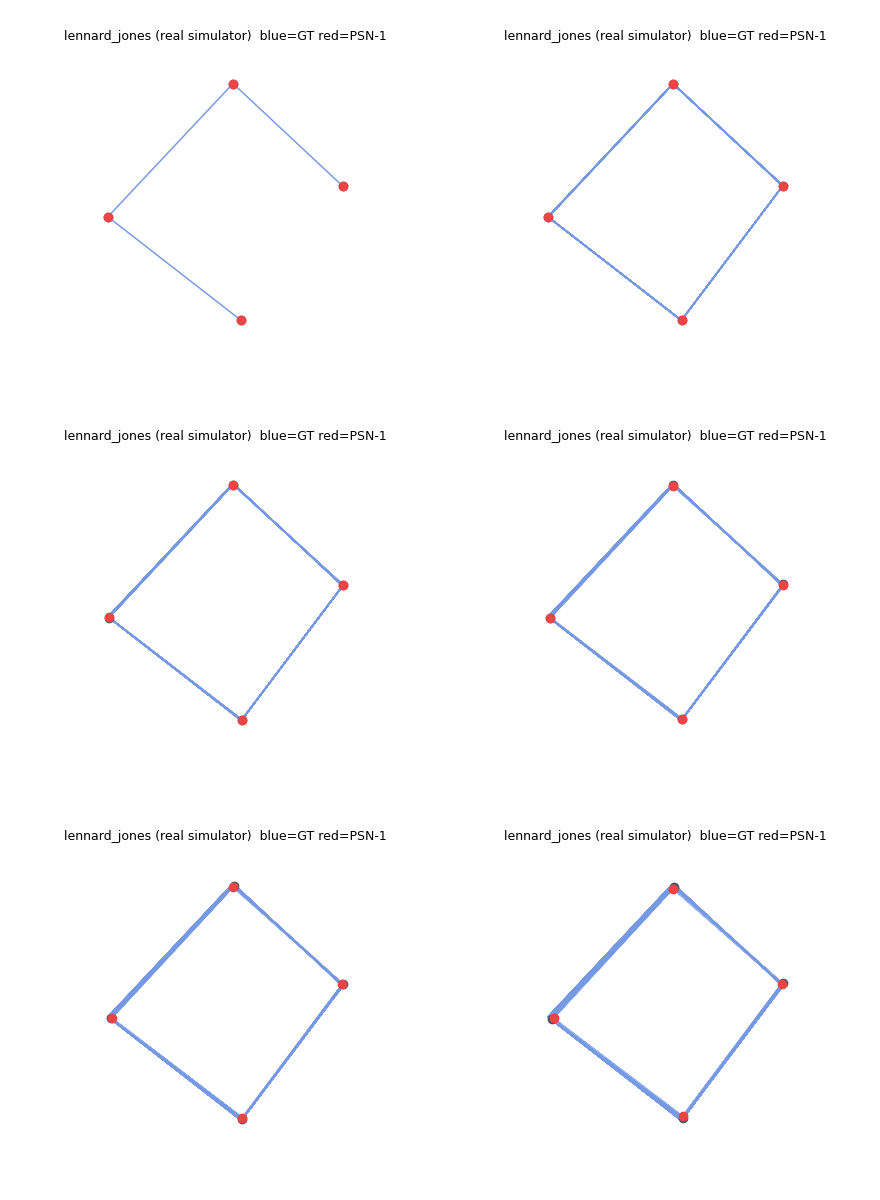
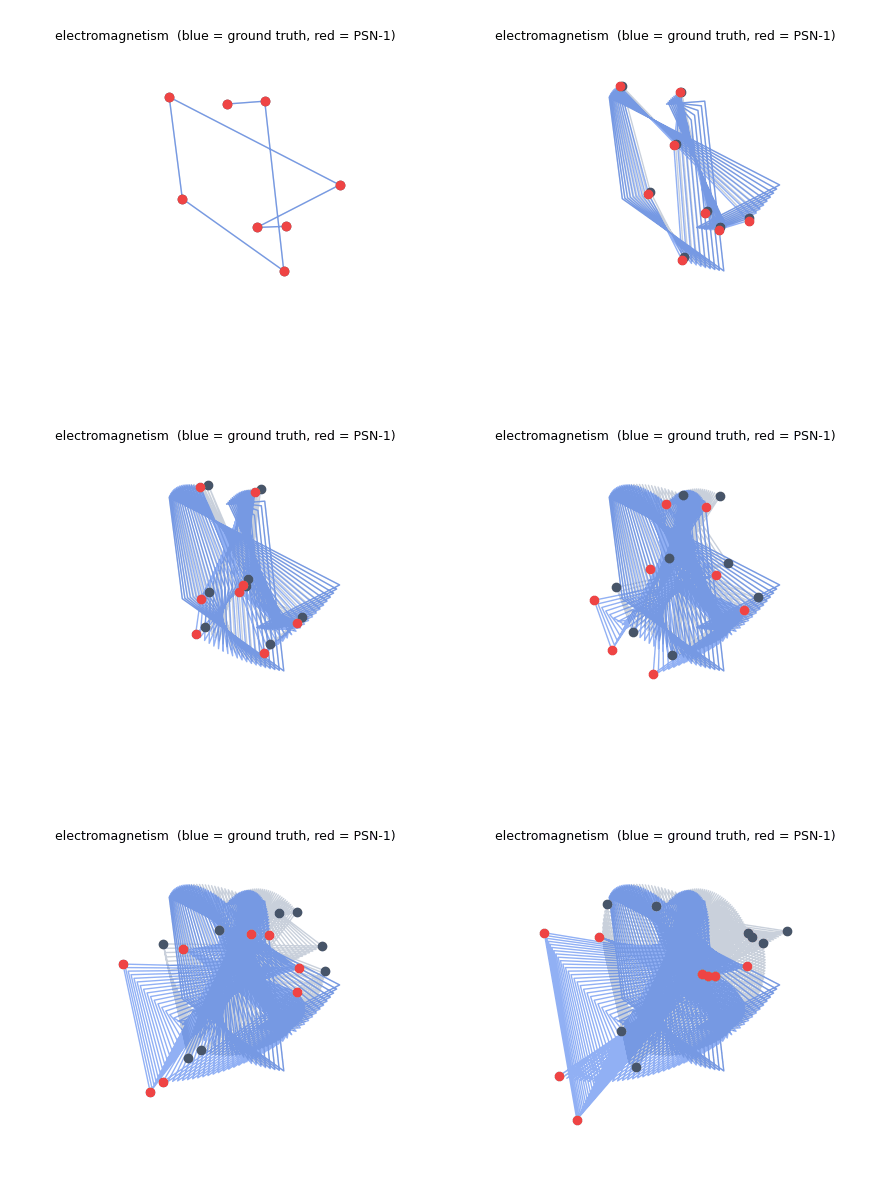
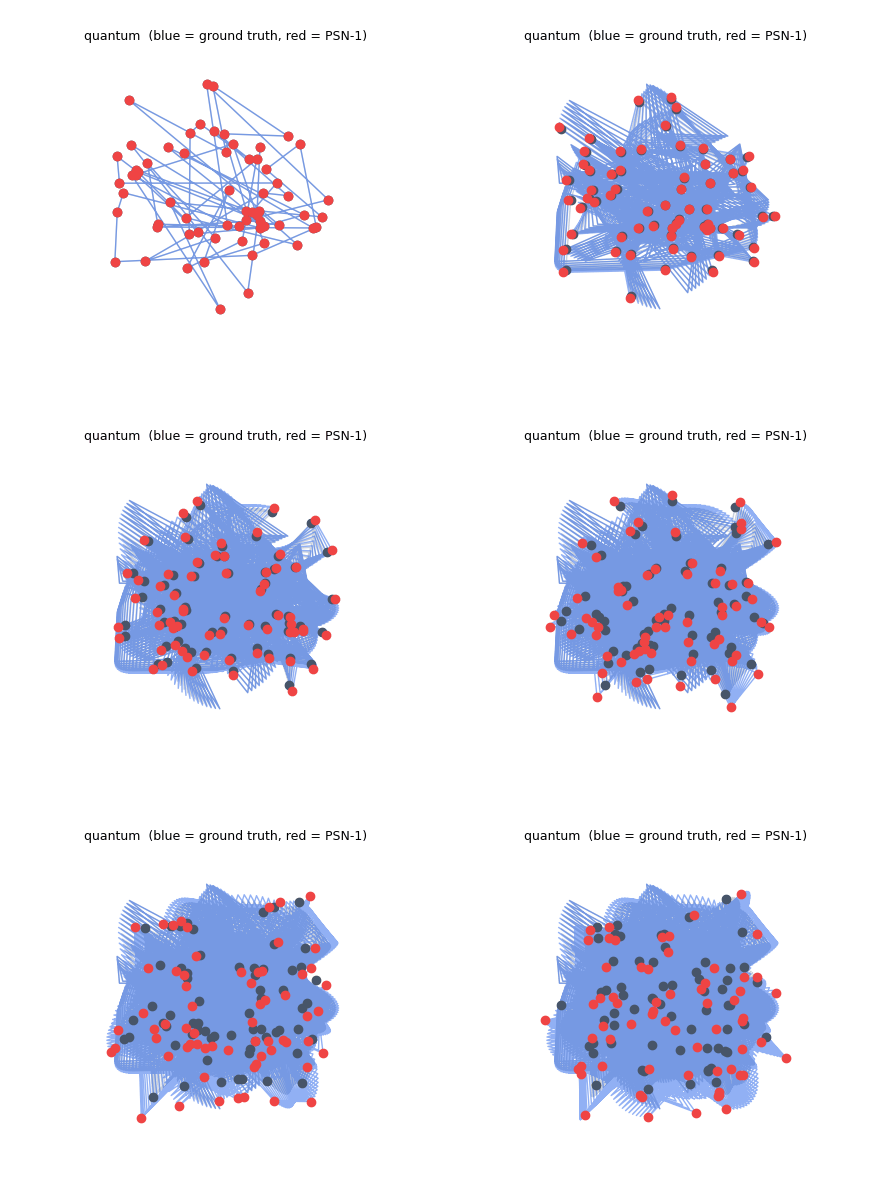
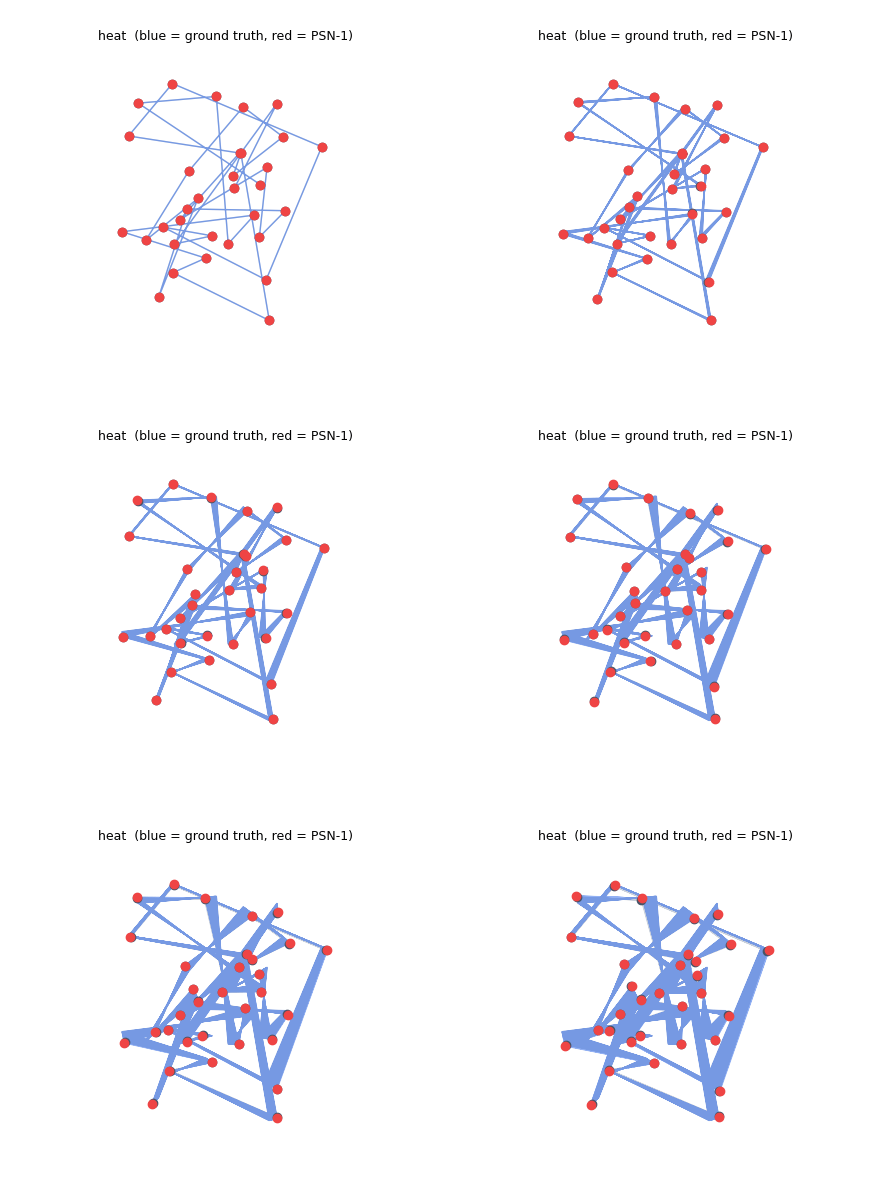
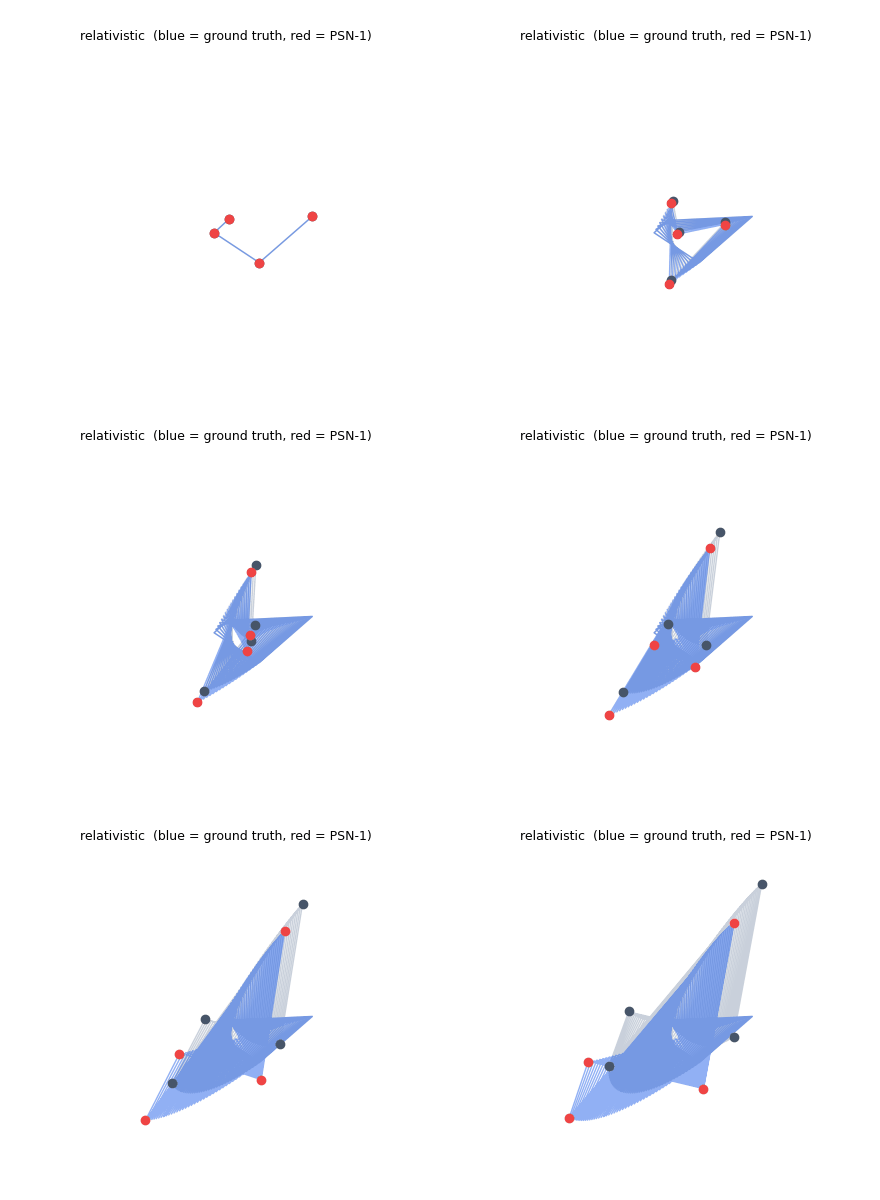
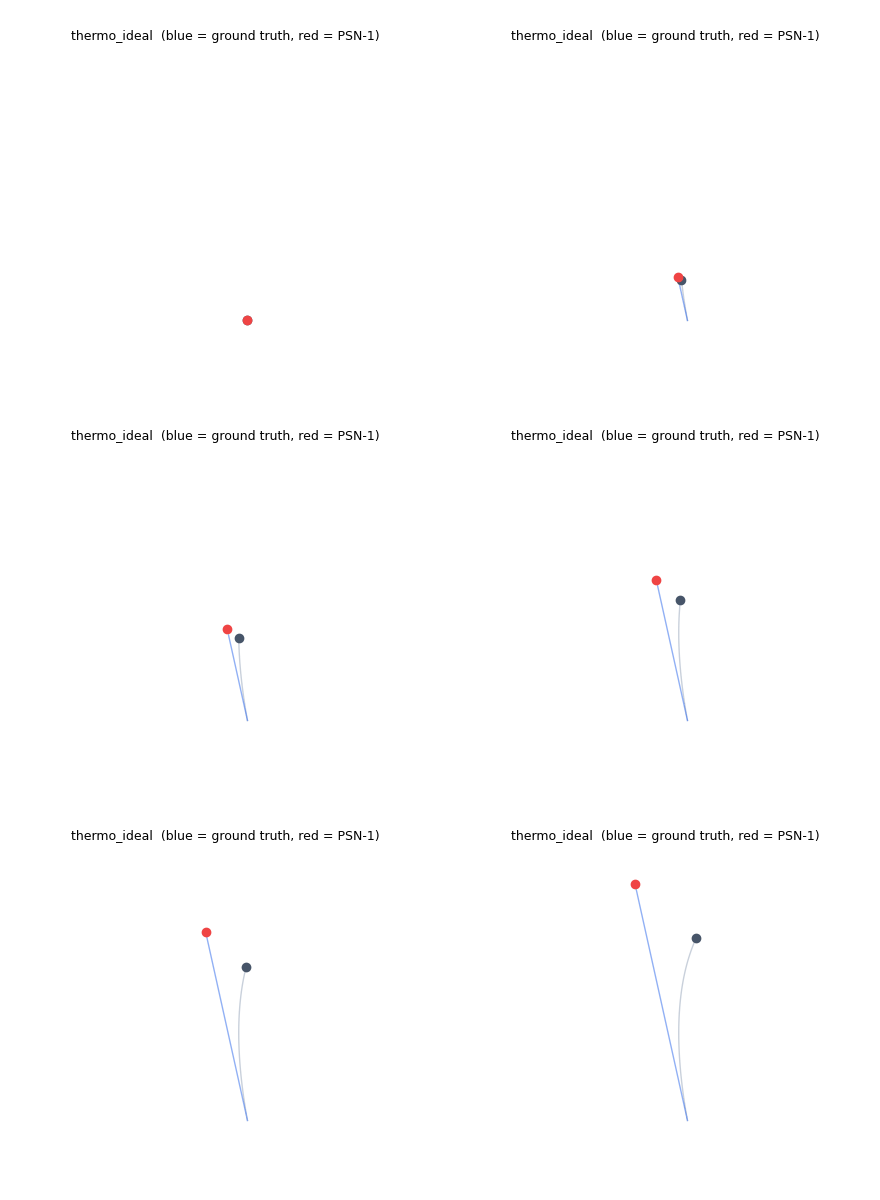
The AlexNet for physics: one 158K-parameter architecture that learns dynamics across nine physics domains. E(3)-equivariant message passing for exact rotation/translation symmetry, attention-based reasoning for complex interactions, automatic conservation law discovery, and physics-informed losses. The learned gate adapts per domain: gravity is almost purely equivariant (g = 0.31), Lennard-Jones is almost purely attention (g = 0.93).
GNoME-Mfg: predict the engineering
Seven engineering physics domains in one codebase. The engineering effort was the debugging of real failure modes: a truss readout that couldn't represent vector displacement, circuit targets that were random noise, isolated nodes that corrupted z-scalers, and an acoustic solver that violated the CFL stability bound. Each fix is documented. Four of seven domains beat the mean predictor.
Simulation clips
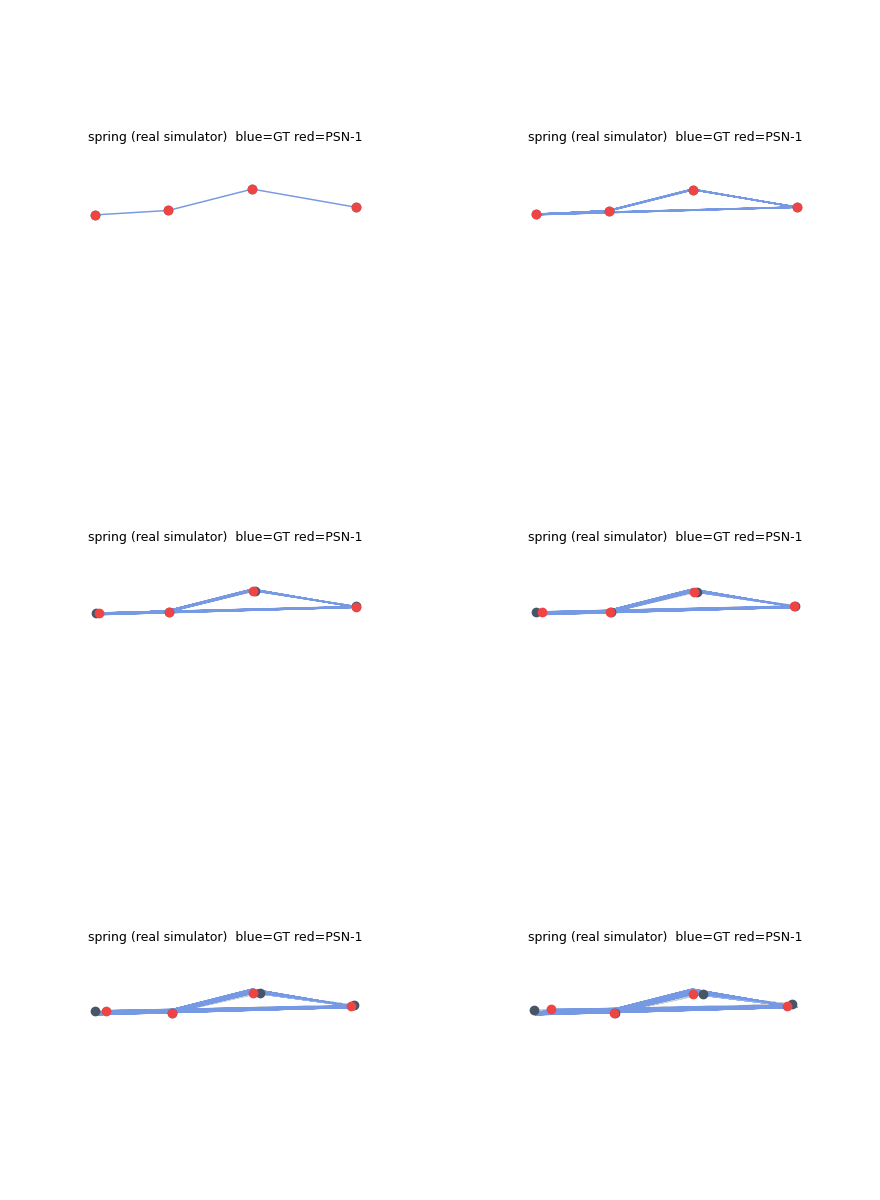
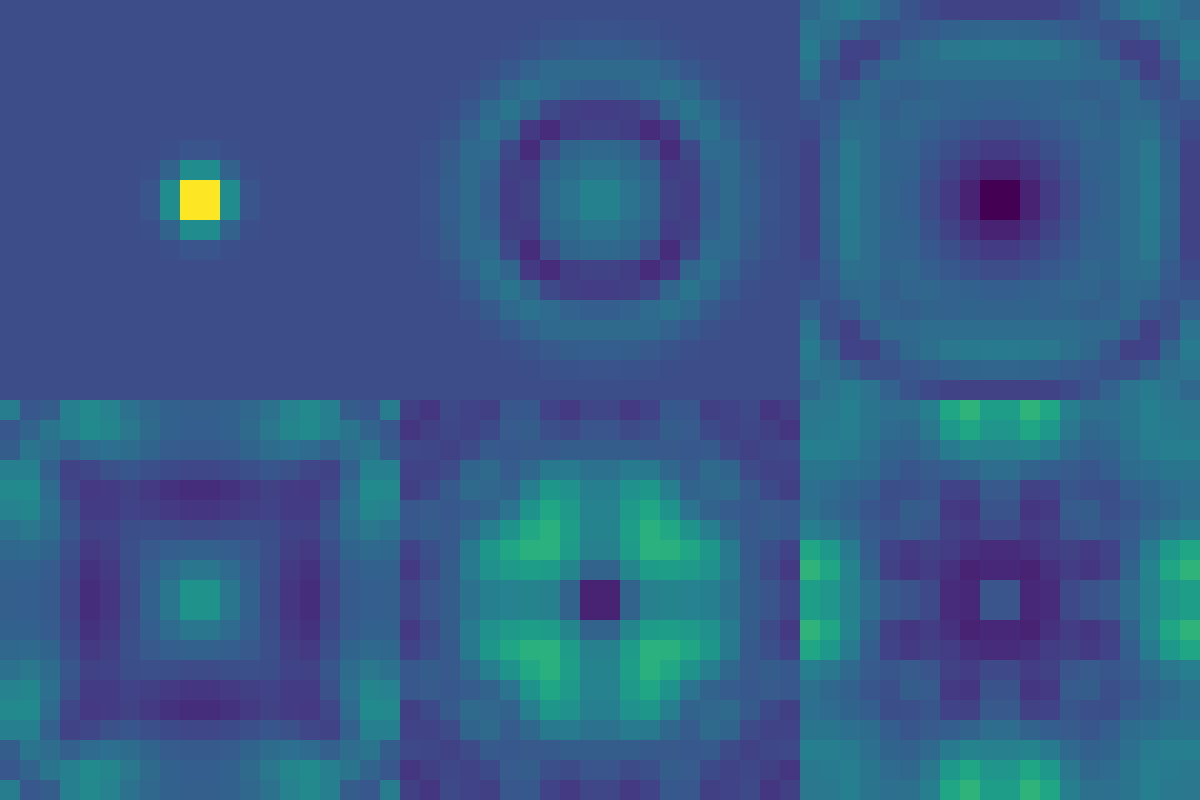
Real-physics simulators from PSN-1 (RK4 integration) and GNoME-Mfg (FDTD acoustic wave):
Full domain gallery on each project site:
Why this matters
The three projects share the same architecture choice for the same reason: systems are graphs, and building architectures that respect that structure — rather than bolting interpretation or physics knowledge onto a general-purpose architecture as an afterthought — produces better results at a fraction of the compute cost.
The interpretability revolution
GNOmE demonstrates that you don't need to interrogate a model to understand it. The information is already in the forward pass. Anthropic's attribution graphs (March 2025) independently reached the same conclusion via backward tracing. The synthesis: mechanistic interpretability is shifting from intervention-based methods to structure-reading methods, and GNOmE reads the structure automatically with cross-task generalization.
The AlexNet moment for physics
PSN-1 demonstrates that one architecture can learn dynamics across the space of classical physics. Before AlexNet, every vision task had a bespoke feature pipeline. After AlexNet, one architecture learned features from data. PSN-1 does the same for physics: one model, nine domains, learned conservation laws. Project Prometheus (Bezos, $38B) targets the same goal with proprietary architecture. PSN-1 is open-source, MIT-licensed, runs on a laptop.
The debugging engineering
GNoME-Mfg demonstrates that the hard part of engineering ML is not the architecture — it's the silent failures. A readout that can't represent vectors. Targets that are random noise. Z-scalers corrupted by isolated nodes. CFL stability violations. Each bug made the model worse than predicting the average, and none of them produced error messages. The failures are the roadmap.
Honest limitations
GNOmE. Recovers 3 of 7 IOI component classes on GPT-2 Small. S-inhibition and induction heads gate signals indirectly, so their single-pass signature is weak. Pearson r = 0.24 vs full activation patching is meaningful but not strong. The GNN reader requires a separate training run per circuit family. Scaling to 70B+ models requires sparse graph construction.
PSN-1. Training data is synthetic harmonic oscillators for 6 of 9 domains. The reported MSEs (gravity, springs, LJ) are on the easy end. Cross-domain transfer is untested. 158K parameters is a proof of concept — scaling is unproven. The conservation discovery module detects but does not enforce conservation at inference.
GNoME-Mfg. All datasets are synthetic. Two domains (circuit, acoustic) have not yet converged under corrected generators. Three-layer message passing is shallow. No real-world validation exists. The gap between synthetic and real is the gap between a paper and a product.
References
- Wang et al., "Interpretability in the Wild: a Circuit for Indirect Object Identification in GPT-2 small," NeurIPS 2023. arXiv
- Conmy et al., "Towards Automated Circuit Discovery for Mechanistic Interpretability," NeurIPS 2023 Spotlight. arXiv
- Anthropic, "Circuit Tracing: Revealing Computational Graphs in Language Models," March 2025. link
- Sanchez-Gonzalez et al., "Learning to Simulate Complex Physics with Graph Networks," ICML 2020. arXiv
- Brandstetter et al., "Geometric and Physical Quantities improve E(3) Equivariant Message Passing," ICLR 2022. arXiv
- Raissi et al., "Physics-informed neural networks," J. Computational Physics, 2019. arXiv
- Merchant et al., "Scaling deep learning for materials discovery" (GNoME), Nature 2023. Nature